Crisis at Antietam by Steven Eden - REVIEW!
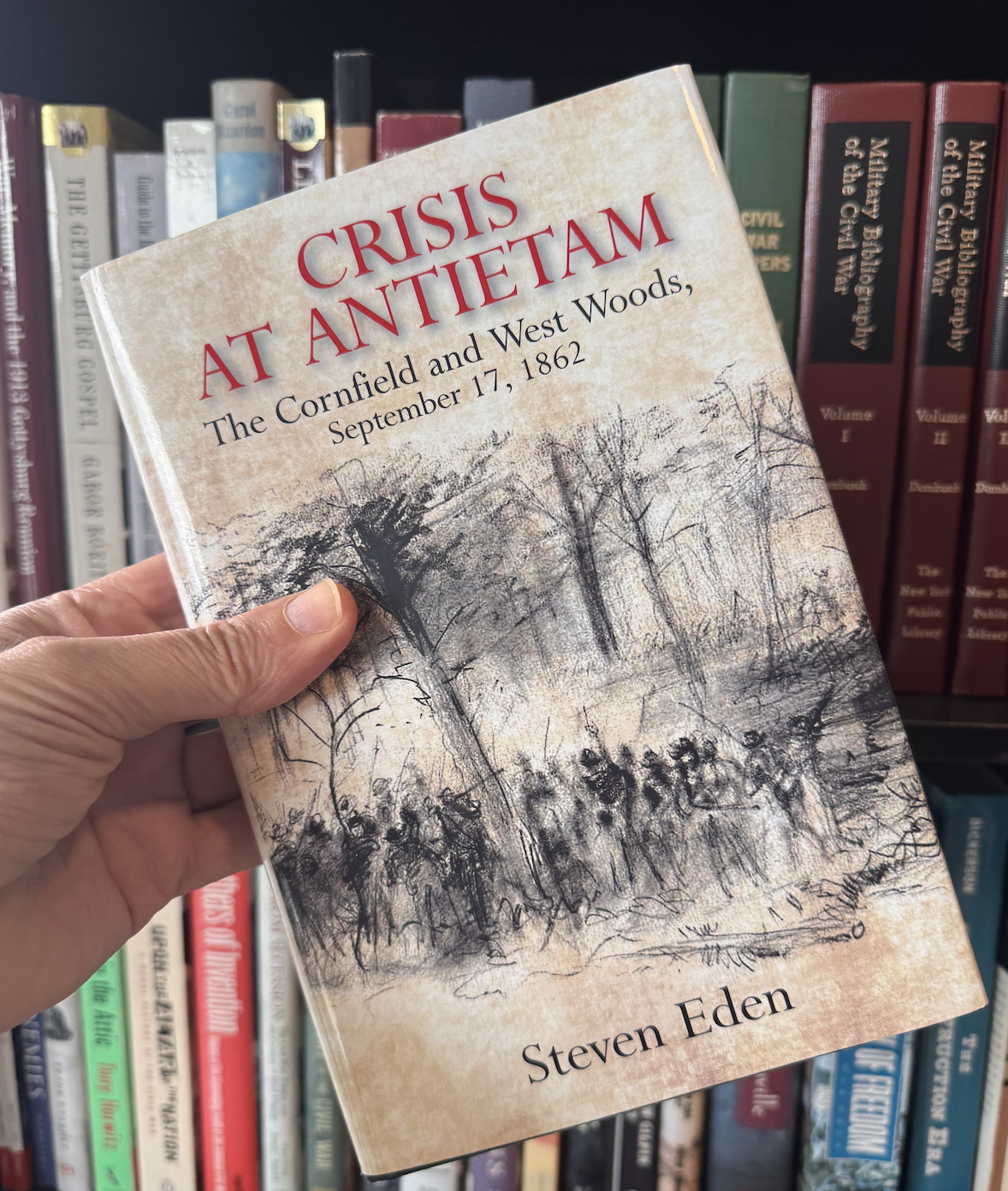
This summer I have set out to learn the Battle of Antietam (I grew up referring to it as the Battle of Sharpsburg…) well enough to give my students a decent tour of the place. A few months ago, as part of my yearly Gettysburg field trip, we dropped down to Maryland to check out the Antietam battlefield and do some comparative study in terms of commemoration and the idea of turning points. What I really discovered is that beyond the basics, I do not know shit about how the battle played out on September 17, 1862. Sure, I had a grand time drawing comparisons between the Antietam and Gettysburg battlefields in relation to the commemorative landscapes (it’s really hard to miss the differences) and we had one of the best conversations about turning points ever. But it bothered me that I was not really familiar with the battle itself.
So, I am currently hard at work. Of course I have read James McPherson’s Crossroads of Freedom and I have commenced going over Bradley Gottfried’s The Maps of Antietam as well. Also on my reading list: Scott Hartwig’s I Dread the Thought of the Place, Stephen Sears’s Landscape Turned Red, and I am just now going through volume one of Ezra Carman’s trilogy on the battle, which is a lovely first-hand account.
Getting more granular has been something of an undertaking, but I have recently come across a book that I really like - Crisis at Antietam: The Cornfield and West Woods, September 17, 1862 by Steven Eden. For starters, I would say the book is exceedingly accessible. The author is a retired Army officer, he taught at West Point, and he has written about warfare across the ages. He knows strategy and tactics and has the kind of intuitive knowledge that lends credence to his conclusions in ways that non-military folks (such as myself) might not readily ascertain. He also writes with clarity, focus and an attention to detail. And I also rather appreciated the specificity of the study. While Eden contextualizes his study within the broader scope of Lee’s invasion of Maryland, noting significant actions at Harpers Ferry and South Mountain, the book zeroes in on the Confederate left, or rather, the northern end of the battlefield.
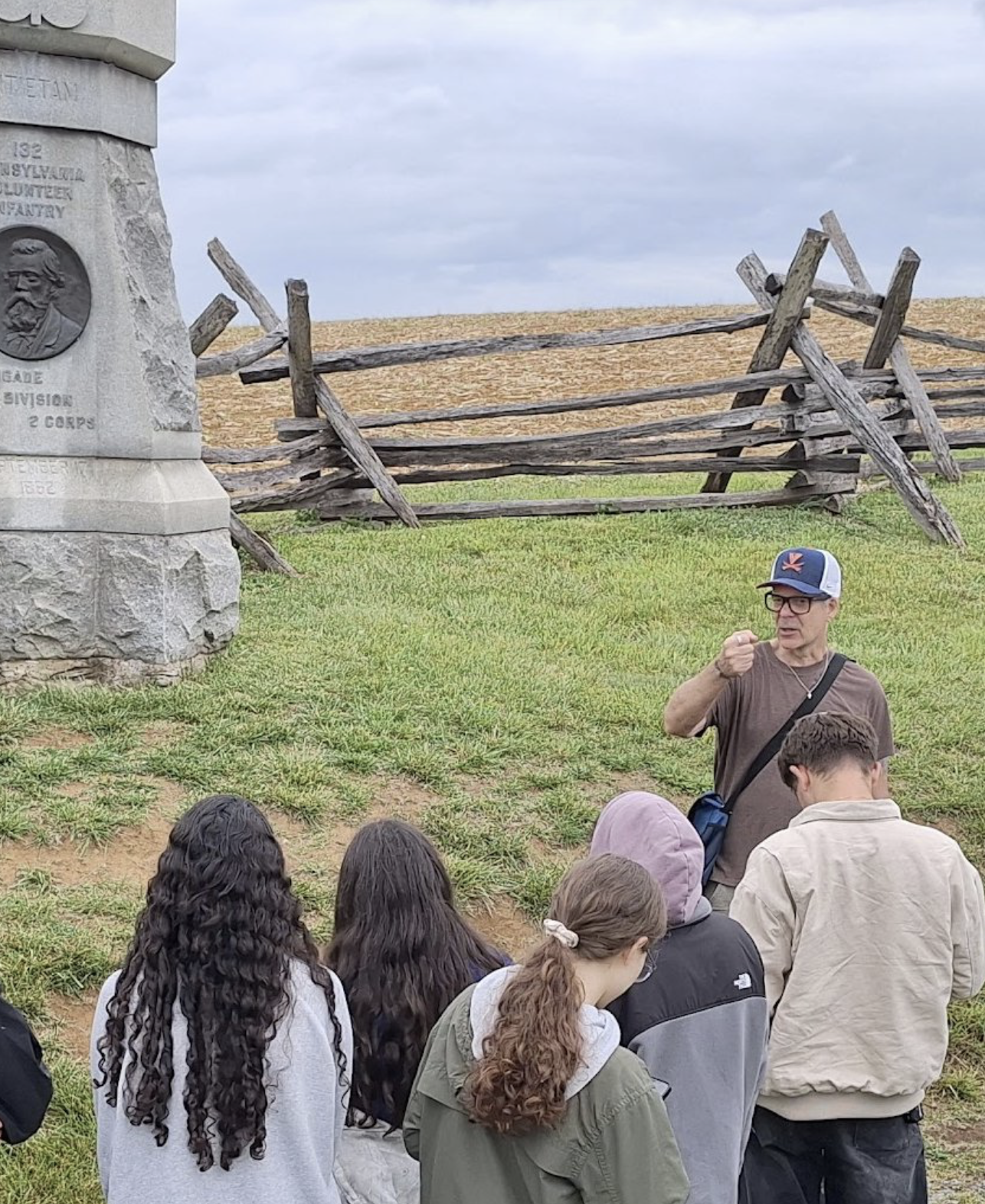
Yours truly leading my own troops on the Antietam battlefield.
It’s well that Eden writes with such clarity, simply because his writing style serves to sort out the chaos defining the opening salvos of the battle around Miller’s cornfield (aka THE cornfield) and the various nearby wood lots, which saw repeated attacks and counter attacks between Rebel and Yankee armies. Eden is equally deft at describing troop deployment at the corps, division, brigade, and regiment levels, and even takes things down to the company or individual experience. He uses primary sources with great skill and likewise provides a number of contextual backstories for key players. Of course, this means you’ll likely go down some rabbit holes on your own (looking up Union Iron Brigade commander John Gibbon’s Confederate brothers, for example) - but hey, a good book should inspire further research and extended reading. This one certainly does….the bibliography and footnotes have done great service for my ever-growing reading list.
Eden brings to life a number of battlefield features that one doesn’t typically see on maps: the height of corn ready for harvest or the particular arrangement of rock outcroppings in the West Woods, for example, or the way black powder smoke obscures the vision to a soldier’s immediate front, compromising the soldier’s fighting effectiveness. He also chronicles episodes of friendly fire and the experiences of green troops, such as the 13th New Jersey, Ezra Carman’s regiment, which had only been around for a few weeks before it “saw the elephant” at Antietam.
As I continue my in-depth reading on Antietam for the next several months I will be sure to return to Eden’s book often. The maps are great, and the appendices are first-rate: clear orders of battle and tabulations of numbers engaged, noting relative numerical strengths of each army. Learning this battle is something of a daunting task - but well worth it, and Crisis at Antietam is certainly a valuable addition to my library.
Grab a copy and let me know what you think!
With compliments,
Keith